
Making sense of wedding flowers
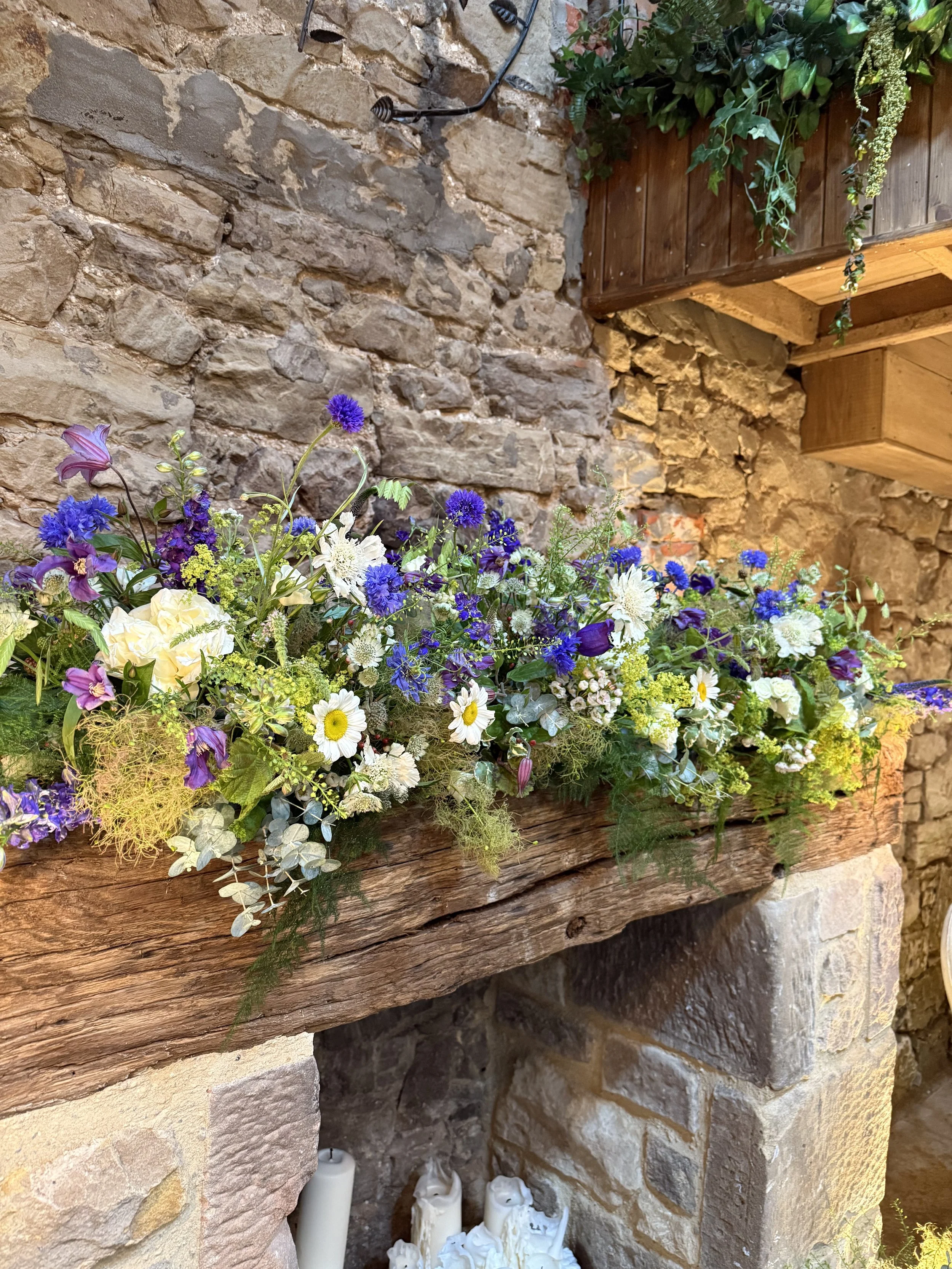
There’s a fair bit of florist terminology that probably means absolutely nothing if you don’t work with flowers every day. We try not to overcomplicate things, so here’s a quick explanation of some of the terms you might hear us use when we’re planning your wedding flowers.
Wedding flower terms, explained
Personal flowers: anything designed to be worn or carried, including bouquets, buttonholes and dress corsages.
Venue flowers: the flowers used throughout your ceremony and reception spaces, from registrar arrangements and table flowers to larger installations.
Statement flowers: larger designs intended to have more visual impact within a space. It's about scale and placement rather than a particular type of arrangement.
Floral installation: a larger design that needs to be constructed or installed at the venue, rather than simply delivered and put in position. Floral columns, staircase flowers and hanging designs are good examples.
Floral meadow: a freestanding floral arrangement created in its own base or mechanics. They can be designed in different shapes, heights and sizes, with varying levels of fullness. That flexibility makes them one of our most versatile designs, working almost anywhere from tables and aisles to larger ceremony spaces and installations.
Long & low: a low-profile, elongated arrangement. We often use these on registrar or top tables because they give you flowers without blocking sight lines.
Bud vases: small individual glass vases containing a few carefully selected stems. Usually grouped together or in pairs rather than used individually, and particularly useful across longer tables.
Urn arrangement: a larger arrangement designed in a decorative urn or milk churn, usually used to add height or create a focal point. They can work on their own, as a pair or alongside meadows.
Floral columns: freestanding vertical arrangements, usually used as a ceremony backdrop or entrance feature. Unlike a traditional arch, they don't need to connect at the top. The level of fullness and scale is all dependant on your preference and the space.
Repurposing plan: planning for flowers to be used in more than one part of the day. For example, ceremony meadows might later be moved to your top table. We plan this in advance because not every design can - or should - be moved. and a full brief is prepped and shared with your venue / wedding manager.
Mechanics: the structures and materials we use to physically create an arrangement or installation. They're usually hidden once everything is finished, but can determine whether a design can be moved or repurposed. Our main mechanics are made up of trays, moss, chicken wire, vases, jars, cable ties and wires.
Logistics: everything involved in physically getting your flowers where they need to be and making the plan work on the day. This can include delivery, access times, setup, moving flowers between spaces, collections and liaising with your venue or other suppliers.
Set-up: the time we spend at your venue getting everything into position and finishing designs on-site before you or your guests arrive. Larger weddings and installations can require several hours of setup.
De-rig / take-down: coming back after your wedding to dismantle installations and collect hired items, mechanics and anything else that belongs to us. This might happen at the end of the night or the following day depending on the venue.
Vision board: the initial visual direction we create for your flowers, giving you an idea of the overall look and feel we're proposing before we've finalised every individual detail. We do this after the initial consultation.
Mood board: the more detailed visual plan we work on nearer your wedding, once your designs and details are being finalised.
Guide prices: an indication of what your flowers are likely to cost based on what we know at that stage. It isn't a fixed final quote because flower prices and your plans can change between booking and the wedding.
Final invoice: when we finalise the plan for your wedding, you’ll get a final invoice. This is accurate based on the designs you want, and flower costs. If we see any discrepancy between guide prices and current prices, we’ll be transparent about it and work with you to move forward.
Minimum spend: the minimum value of flowers/services required for us to take on a wedding booking. It isn't an additional fee - it simply means your overall order needs to meet that value.
Booking fee: the payment that secures your wedding date in our diary. It isn't attached to a specific arrangement; it confirms your booking with us.
Hire items — vases, urns, plinths and other pieces that are supplied for your wedding but remain ours and are collected afterwards.